

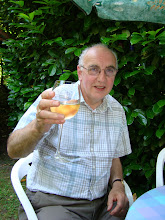
 Today sees the start of the 2009 Flat racing season, and the first big race of the year, the William Hill Lincoln (Heritage Handicap) run over a mile at Doncaster (3.55). The 'Lincoln' is always a tricky affair, as most of the horses have been 'laid out' for the race. The horse we are going to put forward for this valuable £125,000 added race is Huzzah, a 4.y.o. bay colt, trained at Lambourn by Barry Hills (pictured right), and ridden by his son Michael. Huzzah is an early type, winning both of his first two starts in 2008, at Newbury and Chester. He goes on any ground, having won on good/firm and good/soft and he ran well on this track last September when running third to a horse called Virtual, beaten under 2 lengths. But for being slowly away on that occasion he may well have won. The high draw may well prove an advantage and he runs here off a fair handicap mark. You can never be confident in a race like the 'Lincoln' but we are hopeful that Huzzah will run a big race and we expect to see him there or thereabouts at the business end of the race. Barry Hills won this race in 2003 with a horse called Pablo (Won 5/1).
Footnote
The Lincoln is a one mile handicap flat race for four year olds and over, run usually in March at Doncaster racecourse. The Lincoln at Doncaster was first run there in 1965 but the actual history of the race goes back much further. The race was moved to Doncaster after the closure of its original venue Lincoln Racecourse which ceased holding race meetings in 1964. The race had first been run at Lincoln in 1853. At Lincoln the race was known as the Lincolnshire Handicap. The 2007 race was run at Newcastle Racecourse (1m 3yds) and the 2006 race was run at Redcar Racecourse.


